

Dental Implants: 5 Concerns—and What's Really Behind Them
In my practice, dental implants are the topic that patients most often bring up with a half-finished sentence: “I’d like to get an implant, but…”
But I smoke. But I don't have enough. But I'm too old for this. But I'm scared. But I've heard it doesn't last.
I regularly encounter these five concerns during consultations at my practice on Ludwigstraße in Offenbach. And almost every time we take a closer look at them together, they disappear—or at least lose enough weight that an implant becomes a viable option again. I’m Dr. Alessja Indin, a dentist and the owner of the practice in Offenbach-Westend—and I’d like to explain here what’s really behind them.
Table of Contents
If you smoke, you can't get a dental implant—is that true?
Smoking is a risk factor for implant placement. This is medically accurate and is openly discussed during the consultation. Nicotine reduces blood flow to the tissues and can impair osseointegration—the process by which the implant fuses with the bone. Statistically, smokers have a higher risk of healing problems.
But a risk factor is not a criterion for exclusion.
What happens in practice is honest, concrete counseling—about what smoking means during the healing phase and what most patients end up doing.
— Dr. med. dent. Alessja Indin, owner of the Dr. Indin & Team dental practice in Offenbach am Main"Most smokers cut back or take a break when you really explain the facts to them. Not because I demand it, but because they then understand what it's all about."
Anyone who is willing to take this seriously can get an implant. And the guarantee still applies: If an implant does not integrate, the treatment will be repeated free of charge—even for smokers.
Not enough bone for an implant—now what?
That's the most common objection that comes up during counseling. And it's also the one that's most often resolved.
If a tooth is missing for a long time, the jawbone begins to resorb. This is a natural process—the bone no longer receives mechanical stimulation. This resorption can be accelerated following periodontitis or a difficult extraction. Many patients come in saying, “I was told there isn’t enough bone.” And they think that means there’s no hope.
In many cases, bone augmentation is a standard preliminary step before implant placement—not an exceptional procedure, but a preparatory step.
In the upper jaw, an internal sinus lift is used in cases of vertical bone deficiency: Bone substitute material is inserted into the maxillary sinus through the implant site itself—without opening up the face—which is significantly less invasive than the external procedure. For horizontal bone deficiency, the bone-split procedure is effective.
The waiting period between tooth extraction and implant placement is typically three months. Sometimes it’s longer if bone grafting is necessary. But it’s a process—not a final verdict.
Getting a dental implant at 70—is it worth it?
There is no upper age limit for dental implants.
What matters is the patient’s overall health: Is bone density sufficient? Is oral health stable? Are there any systemic diseases that need to be taken into account? These questions apply just as much to a 45-year-old as to a 72-year-old. Age alone is not a determining factor.
Dental implants in older age are not an exception. They are a well-considered choice for chewing function, bone preservation, and quality of life. An implant protects the jawbone from further bone loss and fits just like a natural tooth—this is just as relevant at age 70 as it is at age 50. What sometimes changes is the personal cost-benefit analysis. The best way to determine whether it’s worth it is to discuss it in person.

The procedure scares me
This is not an objection that should be dismissed. Fear of oral surgery is common and understandable.
What Really Happens During Dental Implant Surgery: The procedure usually takes less than an hour and is performed under local anesthesia. What surprises many patients is that pain during the procedure is rare. What you feel is pressure—not pain. In the days following the procedure, mild swelling may occur, but it subsides quickly.
Patients with dental anxiety make up a significant portion of the patient base at the Ludwigstraße practice. They regularly report that this is the first time they’ve been able to truly relax at a dental office. No time pressure, no pressure to buy—and a detailed explanation before anything begins.
— Dr. med. dent. Alessja Indin, owner of the Dr. Indin & Team dental practice in Offenbach am Main“I explain everything before I begin. Not so that patients have to agree—but so they can come to terms with it. Anyone who knows what to expect doesn’t need sedation. They just need peace and time.”
Implants don't last—and are even said to be carcinogenic
Both claims are circulating online. Both deserve an honest assessment.
Regarding durability: Long-term studies show success rates of over 95 percent after ten years. This makes dental implants among the most durable restorations in modern dentistry. What truly determines durability is the combination of planning, the implant system, surgical precision, and post-operative care. An implant that does not fit properly is almost always a planning issue—not a material issue.
On the topic of carcinogenicity: There is no credible scientific evidence that titanium implants cause cancer. Titanium is one of the most biocompatible materials available and has been used in medicine for decades—in hip replacements, pacemakers, and bone screws. For titanium implants, the practice relies on systems from Straumann as well as the Dentsply Sirona OmniTaper EV. Those who prefer a metal-free alternative can opt for zirconia ceramic implants—manufactured by SDS (Swiss Dental Solutions).
What you need to know: Peri-implantitis—an inflammation around a fully integrated implant that can lead to problems if proper aftercare is lacking. This is not a myth—it can be largely prevented through good oral hygiene and regular checkups. The disadvantages of implants should be openly discussed during the consultation—and that’s exactly what happens at Dr. Indin’s practice.
— Dr. med. dent. Alessja Indin, owner of the Dr. Indin & Team dental practice in Offenbach am Main“An implant that doesn’t last isn’t the patient’s fault. It’s a shared responsibility—and I take full responsibility for it. The treatment will be repeated at no cost. No questions asked.”
Most reasons for hesitation aren't really reasons at all
That doesn't mean an implant is right for everyone. There are situations where an honest "no" is the right answer—and that's exactly what we give. But the question of whether it's possible deserves a genuine answer. Not a blanket "no" based on an old examination, not a statement based on hearsay.
If you have any questions, you can discuss them during a relaxed initial consultation at our dental practice in Offenbach—located at Ludwigstraße 34—with no obligation and no time pressure. All additional information about the treatment, the process, and the costs can be found on the Dental Implants page.
Schedule an appointment—at your convenience, with no obligation
If you're wondering whether any of the five reasons apply to your own situation, you can find out during a relaxed initial consultation. Questions are allowed to remain unanswered—and they will be in this practice.
The practice of Dr. Alessja Indin & Team is located at Ludwigstraße 34 in Offenbach-Westend—easily accessible to patients from Offenbach, Frankfurt, and the entire Rhine-Main region. If you’re looking for a dentist in Offenbach who specializes in implantology and provides comprehensive, personalized care, you’ve come to the right place.
Termin vereinbaren unter 069 881313 oder online.
Häufig gestellte Fragen
zum Zahnimplantat in Offenbach
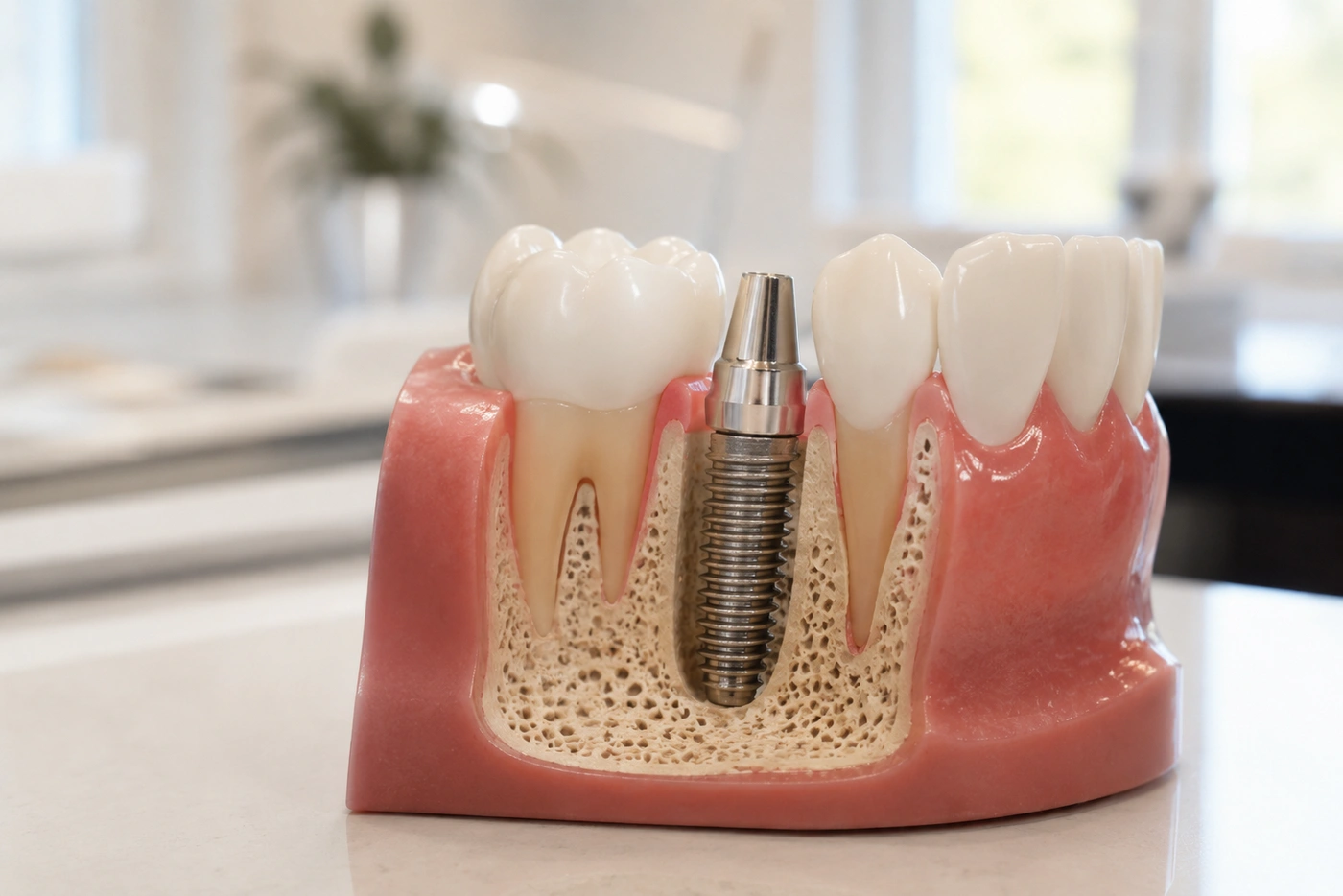
Ja. Rauchen ist ein Risikofaktor, kein Ausschlusskriterium. Es verschlechtert die Durchblutung des Zahnfleisches und kann die Einheilung des Zahnimplantats verlangsamen. Mit ehrlicher Aufklärung reduzieren oder pausieren die meisten Raucher vor der Einheilphase, und genau das verbessert die Ausgangslage spürbar. Die Garantie unserer Praxis gilt auch für Raucher: Wächst ein Implantat nicht ein, wiederholen wir die Behandlung kostenlos.
Knochenaufbau ist eine normale Vorstufe und kein Grund, auf ein Zahnimplantat zu verzichten. Im Oberkiefer setzen wir dafür den internen Sinuslift ein, bei dem Knochenersatzmaterial direkt über die Implantatbohrung eingebracht wird. Ist der Kiefer zu schmal, kommt das Bone-Split-Verfahren zum Einsatz, bei dem der Knochenkamm schonend gespalten und erweitert wird. Beide Verfahren ermöglichen eine Implantation auch bei reduziertem Knochenangebot. Einen großen, externen Sinuslift führen wir bewusst nicht durch, weil sich derselbe Effekt deutlich schonender erreichen lässt.
Nein. Was zählt, ist der Allgemeinzustand, nicht das Alter. Entscheidend sind ein ausreichendes Knochenangebot, eine stabile Mundgesundheit und die allgemeinmedizinische Situation, zum Beispiel ein gut eingestellter Diabetes. Diese Fragen stellen sich bei einem 45-Jährigen genauso wie bei einem 72-Jährigen. Zahnimplantate im Alter sind eine durchdachte Entscheidung für Kaufunktion und Lebensqualität, weil sie festen Halt geben und den Kieferknochen belasten, der sonst mit der Zeit zurückgeht.
Nein. Es gibt keine seriöse wissenschaftliche Evidenz dafür. Titan ist eines der biokompatibelsten Materialien überhaupt und wird seit Jahrzehnten in der Medizin eingesetzt, etwa auch bei künstlichen Gelenken. Wir verwenden das Implantatsystem OmniTaper EV von Dentsply Sirona, den Nachfolger des bekannten Astra-Tech-Systems mit langer klinischer Dokumentation. Wenn Sie Sorgen zu Materialien haben, nehmen wir uns in der Beratung gern die Zeit, alle Fragen in Ruhe zu beantworten.
In unserer Praxis wird die Behandlung dann kostenlos wiederholt. Kein erneuter Eigenanteil, keine Diskussion. Das gilt ausdrücklich auch für Raucher. Sie haben bereits viel in Ihr Zahnimplantat investiert und sollen nicht doppelt zahlen. Diese Garantie ist im Markt keine Selbstverständlichkeit, für uns gehört sie zu einer ehrlichen Behandlung dazu.
Ein gut eingeheiltes und gepflegtes Zahnimplantat kann viele Jahre und oft Jahrzehnte halten. Entscheidend sind eine sorgfältige Planung, eine präzise Implantation und die Pflege danach. Gefährlich für ein Implantat ist vor allem eine Entzündung des umliegenden Gewebes, die ähnlich wie eine Parodontitis verläuft. Deshalb empfehlen wir Implantatpatienten mindestens zweimal im Jahr eine professionelle Zahnreinigung. So bleiben Zahnfleisch und Knochen rund um das Implantat gesund.
Die Implantation selbst erfolgt unter örtlicher Betäubung und ist in der Regel schmerzfrei. Wir arbeiten mit dem kleinsten geeigneten Bohrer und verschließen die Wunde sorgfältig mit einer Naht. In den Tagen danach kann ein Druckgefühl oder eine leichte Schwellung auftreten, die meist gut mit üblichen Schmerzmitteln und Kühlung zu beherrschen ist. Nach etwa zehn Tagen werden die Fäden entfernt. Patienten mit Zahnarztangst begleiten wir besonders behutsam und ohne Zeitdruck.
Die Kosten hängen davon ab, ob ein Knochenaufbau nötig ist, welche Krone auf das Implantat kommt und wie viele Zähne ersetzt werden. Deshalb erstellen wir vor jeder Behandlung einen individuellen Heil- und Kostenplan, den wir gemeinsam mit Ihnen besprechen. Die gesetzliche Krankenkasse zahlt für Zahnersatz einen Festzuschuss, den Rest tragen Sie selbst oder Ihre Zusatzversicherung. Für größere Beträge bieten wir eine Ratenzahlung mit bis zu 72 Monatsraten an, bei bis zu sechs Raten zinsfrei. So können Sie in Ruhe planen, ohne Überraschungen.
Von der Zahnentfernung bis zur fertigen Krone vergehen in der Regel sechs bis acht Monate. Nach einer Extraktion heilt der Kiefer zunächst etwa drei Monate. Nach der Implantation folgt eine Einheilphase von rund drei Monaten, in der Sie ein unsichtbares Provisorium tragen, das Sie nichts kostet. Danach formen wir das Zahnfleisch, scannen digital mit dem Medit i900 und lassen die Krone im Labor anfertigen. Ab der Implantation dauert es meist höchstens sechs Monate bis zum fertigen Zahn.
Sofortimplantationen sind möglich, wir sehen sie aber kritisch, weil das Risiko eines Implantatverlusts deutlich höher ist. Meist empfehlen wir deshalb ein Provisorium während der dreimonatigen Einheilphase. All-on-4- und All-on-6-Versorgungen bieten wir bewusst nicht an. Komplettversorgungen brauchen aus unserer Sicht einen schrittweisen Aufbau und eine engmaschige Begleitung. Dafür bleibt bei uns die gesamte Behandlung in einer Hand, von der Diagnostik bis zur fertigen Krone.
-
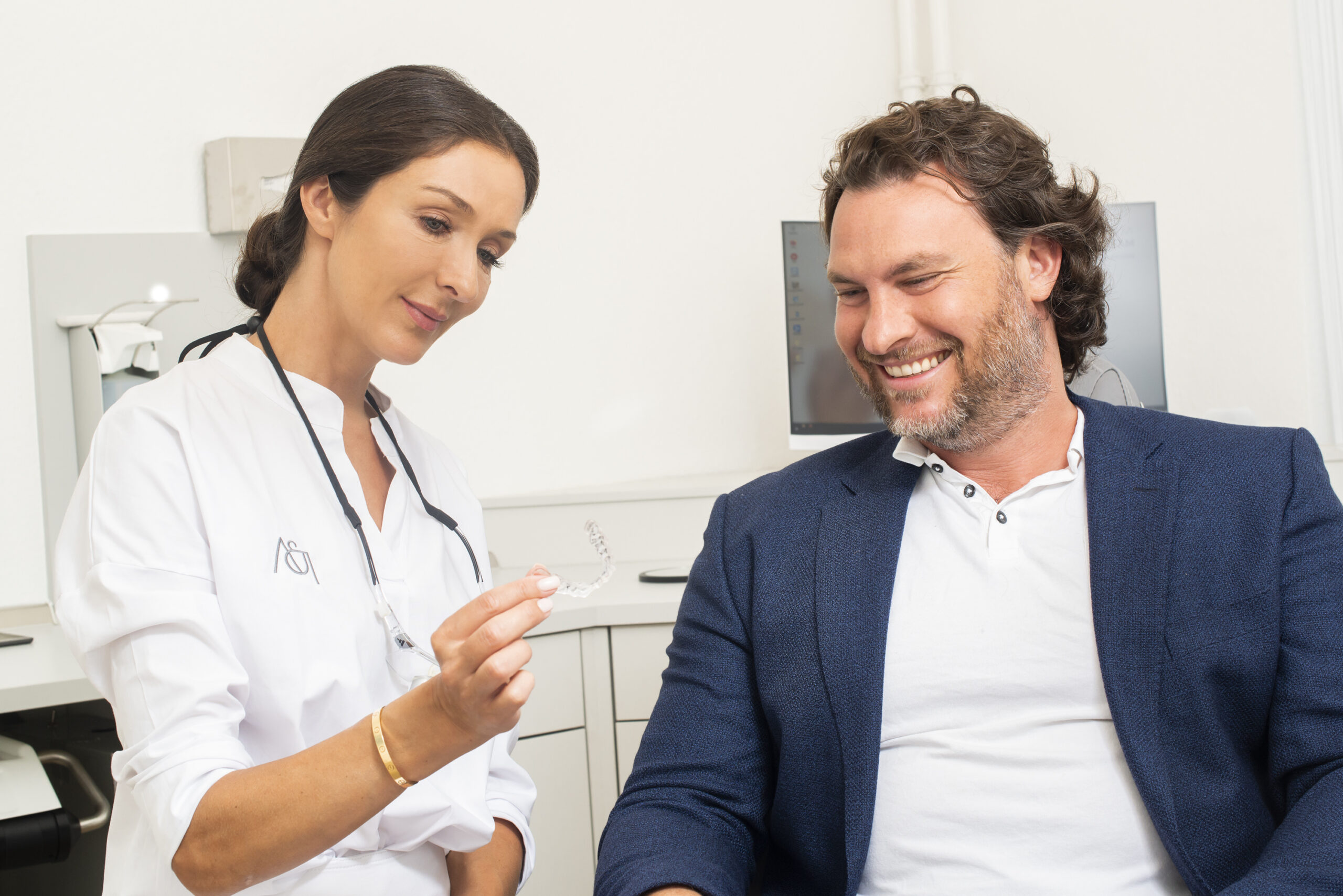
An aligner for adults—it sounds easier than it sometimes is. Anyone looking into this has usually already read quite a bit: testimonials, price comparisons, before-and-after photos. And yet, most questions don’t come up until the treatment becomes a concrete reality. I, Dr. Alessja Indin, work every day at my practice on Ludwigstraße in Offenbach with people who want to undergo orthodontic treatment—and who…
-

How long do veneers last? This is one of the most common questions asked by patients considering this treatment. The honest answer: between five and fifteen years—sometimes even longer. But why such a wide range? Veneers are wafer-thin ceramic shells that are bonded to the front surface of the front teeth. They change the color, shape, and position of a tooth without…
-
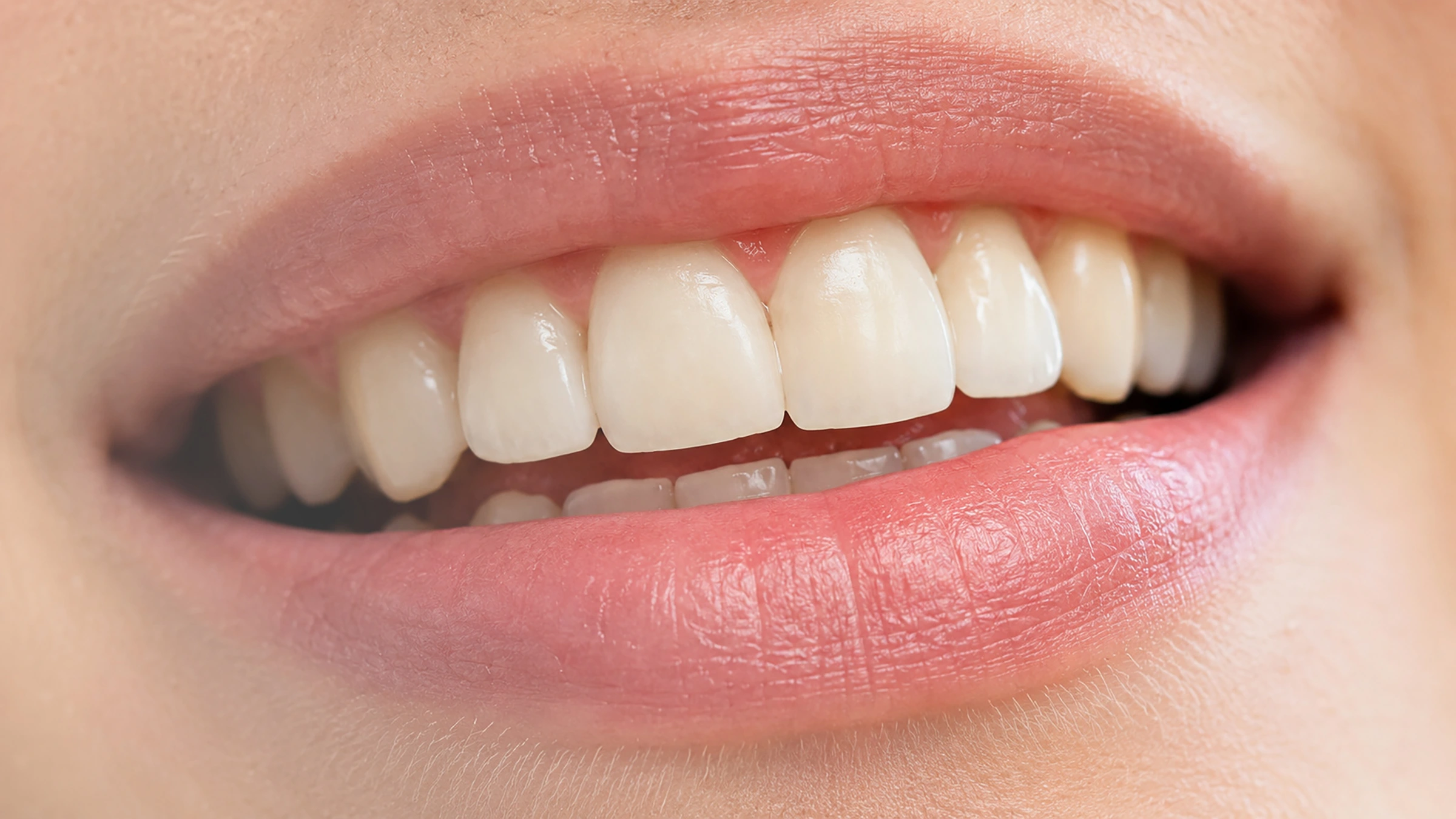
The desire to have teeth whitened is one of the most common requests in my practice—and few topics come with such a wide range of expectations. Some patients come in with a very specific idea in mind, while others have no idea what to expect. And almost always, after the initial consultation, it becomes clear that the result depends on six factors that neither…
-
Dentosophy didn't come to me through a textbook. It came to me through my own daughter. Being both a mother and a dentist isn't always an advantage. You know too much to feel at ease—and too little to have an answer right away. I sat with her at the orthodontist's office, listened to the options, and had the feeling that…
-

Root canal treatment is a source of anxiety for many people. There are reasons for this, but they often disappear when you take a closer look. Anyone in Offenbach facing root canal treatment usually has the same questions: Will it hurt? How long will it take? How much will it cost? And above all: Who can I trust with my tooth? This article summarizes the seven most important points…
