
What Dentosophy Can Do: 7 Ailments You'd Never Think to See a Dentist For
I didn't learn about dentosophy from a textbook. I learned about it from my own daughter.
Being both a mother and a dentist isn’t always an advantage. You know too much to feel at ease—and too little to have an answer right away. I sat with her at the orthodontist’s office, listened to the options, and felt like we weren’t really getting to the root of the problem. I wanted to understand what was behind it—not just how to correct the result.
This path led me, Dr. Alessja Indin, to Italy, where I completed my training at EBTAMED—the very place where the method was developed. Since then, Dentosophy has been a key focus of our dental practice in Offenbach. And ever since, I’ve been regularly surprised by how many health issues it can address—issues that most people would never associate with a dentist.
Table of Contents
What is Dentosophy—and how does the method work?
Dentosophy is a functional approach that uses a soft rubber balancer—the Equilibrator—to address three key bodily functions: swallowing, breathing, and chewing. No brackets, no pressure, no active force application. The body finds its physiological neutral position on its own—the Equilibrator creates the conditions for this to happen.
If you’d like to learn more about the method, the treatment process, and the device, you’ll find all the essential information on our Dentosophie page (/dentistry/dentosophie-offenbach/). This page covers the areas of application—and explains why they surprise so many people.
Snoring: How Dentosophy Addresses the Cause in the Mouth
Snoring is an issue for the ENT specialist, the sleep medicine specialist, and your partner—but surely not for the dentist?
Yes, it is. Because in many cases, the cause lies in breathing—more specifically, in mouth breathing. When you breathe through your mouth at night, your lower jaw stays open, your tongue falls back, and the soft tissue in your throat vibrates. Snoring is often not a matter of anatomy, but rather a matter of breathing patterns.
The Equilibrator actively promotes nasal breathing. It trains the tongue to rest against the roof of the mouth and helps the body gradually change its nighttime breathing pattern. No surgery. No pressure-based device. Just a soft rubber piece worn at night—and it does more than you’d expect.
— Dr. med. dent. Alessja Indin, dentist trained in Dentosophy (EBTAMED, Italy)"In many cases, snoring isn't an anatomical problem. It's a breathing pattern. And breathing patterns can be changed."
Teeth Shift Back After Braces—Dentosophy Explains Why
Orthodontists call it relapse. Patients call it frustration. The teeth are straight, the retainer is in place—and yet, at some point, something starts shifting again.
In most cases, the cause isn’t the braces, the retainer, or the treatment itself. It’s the tongue. People swallow about 3,000 times a day. Those who do not position their tongue correctly against the roof of the mouth but instead press it against their teeth—a pattern known as visceral swallowing—generate a force that no orthodontic appliance can permanently neutralize.
An incorrect resting position of the tongue, a physiologically incorrect tongue position during swallowing: These are the hidden factors that cause malocclusions to recur after treatment. Dentosophy addresses precisely this issue. It corrects the swallowing pattern—and thus the cause, not just the result.
When Shoulder Imbalance and Posture Are Related to the Teeth
At first glance, the idea that a misaligned bite affects posture might seem far-fetched. But it isn't.
From a posturological perspective, the temporomandibular joint is closely linked to the spine, shoulder alignment, and head posture. A malocclusion that forces the lower jaw into an asymmetrical position can trigger a chain of compensatory movements—all the way down to the back. In our practice, we document this using a posturological measurement wall: The patient stands in front of a wall marked with lines, and their posture is photographed. Shoulder height, head tilt, weight distribution—everything is visible, everything is measurable.
Here’s what Dentosophy, as a form of holistic dentistry, accomplishes: It brings the jaw into a neutral position—thereby enabling the body to let go of its own compensatory patterns. Sometimes, tension that has persisted for years is released. Not always. But more often than you might think.
— Dr. med. dent. Alessja Indin, dentist trained in Dentosophy (EBTAMED, Italy)"When a patient with back pain comes to see me and I ask when they last went to the dentist, some of them look at me as if I'd asked the wrong question. That's exactly the point."
Improper Swallowing Pattern: How Dentosophy Corrects It in Adults, Too
I know from personal experience that an incorrect swallowing pattern can go unnoticed for a lifetime—I recognized it in myself early on.
The visceral, infantile swallowing pattern—with the tongue pressing against the teeth instead of the palate—persists throughout life in many adults. You don’t notice it because you can’t feel it. But it’s at work: 3,000 times a day, with constant force, pressing against the teeth.
I corrected my swallowing pattern in three months—without speech therapy or active exercises. The Equilibrator changed the position of my tongue while I slept and while I wore it—and my body learned. This is not an exception. It’s the rule with this method. Correct tongue position, physiological resting position of the tongue, and correct swallowing pattern: These three things are interconnected, and they can be changed—even in adulthood, even without years of therapy.
Bruxism: Why a Night Guard Is Often Not Enough
A night guard is the standard treatment for teeth grinding. It protects tooth structure, relieves pressure on the jaw muscles, and provides space for the jaw. All of this is true and makes sense.
But it treats the symptom, not the cause.
In many cases, people who grind their teeth have a temporomandibular joint that cannot find a neutral resting position. Their jaw is not relaxed during sleep. There is no effective coordination between swallowing, breathing, and chewing. The body seeks relief during sleep—and finds it in grinding.
Dentosophy addresses precisely this underlying problem: The Equilibrator brings the temporomandibular joint into a neutral position, promotes nasal breathing, and corrects swallowing patterns. Teeth-grinding relaxation exercises and measures to relax the jaw during sleep are complementary to this approach. Sometimes a mouthguard is still helpful. Sometimes it is no longer necessary.
— Dr. med. dent. Alessja Indin, dentist with a Dentosophy curriculum (EBTAMED, Italy)“As a dentist, I’ve learned that you can correct an incorrect swallowing pattern. As a patient, I’ve experienced firsthand that it actually works. The combination of the two makes all the difference.”
Mouth Breathing and Its Effects on Teeth and the Jaw
Breathing through the mouth seems harmless. It isn't.
People who breathe through their mouths on a regular basis—during the day, at night, or both—fundamentally alter the oral ecosystem. Saliva dries up, the protective function of the oral mucosa is compromised, and tooth decay and tartar build-up increase. The tongue does not rest against the roof of the mouth. This means there is no natural pressure from the inside on the upper jaw and no counterbalance to the cheek muscles from the outside.
The result over the years: a narrow, constricted upper jaw. Crowding. Crossbite. Open bite. Malocclusions for which traditional orthodontics requires active appliances—but which Dentosophy can often initiate simply by correcting breathing patterns.
For patients from Offenbach and the entire Rhine-Main region who are faced with such findings: It’s worth understanding the cause before deciding on a treatment.
Headaches and Muscle Tension—When CMD Is the Cause
Headaches, neck stiffness, jaw clicking, and ringing in the ears—these are the classic symptoms of craniomandibular dysfunction, or CMD for short. Gnathology—the science of the masticatory system and its interrelationships—has been describing for decades just how closely the jaw, muscles, and the entire head-and-neck system are interconnected. Stomatology—the comprehensive study of the oral cavity and its systemic connections—takes this concept even further.
In practice, this means: Patients come in with headaches that cannot be explained neurologically. With muscle tension that physical therapy only helps alleviate temporarily. With a jaw that feels stiff in the morning.
In these cases, dentosophy provides the functional foundation: A temporomandibular joint that finds a neutral resting position transmits less tension to the surrounding muscles. Sometimes that’s enough. Sometimes it’s the first step before further measures are warranted.
Schedule an appointment—at your convenience, with no obligation
Dentosophy is a method that needs to be explained—not sold. If you're wondering whether any of the seven use cases apply to you, you can find out during a consultation.
Our practice is located at Ludwigstraße 34 in Offenbach—in the heart of downtown Offenbach, easily accessible to patients from Offenbach, Frankfurt, and the entire region. If you’re looking for a holistic dentist nearby who treats dentosophy not as a side issue but as a core focus of their practice, you’ve come to the right place.
Schedule an appointment by calling 069-881313 or online.
-

An aligner for adults—it sounds easier than it sometimes is. Anyone looking into this has usually already read quite a bit: testimonials, price comparisons, before-and-after photos. And yet, most questions don’t come up until the treatment becomes a concrete reality. I, Dr. Alessja Indin, work every day at my practice on Ludwigstraße in Offenbach with people who want to undergo orthodontic treatment—and who…
-

How long do veneers last? This is one of the most common questions asked by patients considering this treatment. The honest answer: between five and fifteen years—sometimes even longer. But why such a wide range? Veneers are wafer-thin ceramic shells that are bonded to the front surface of the front teeth. They change the color, shape, and position of a tooth without…
-
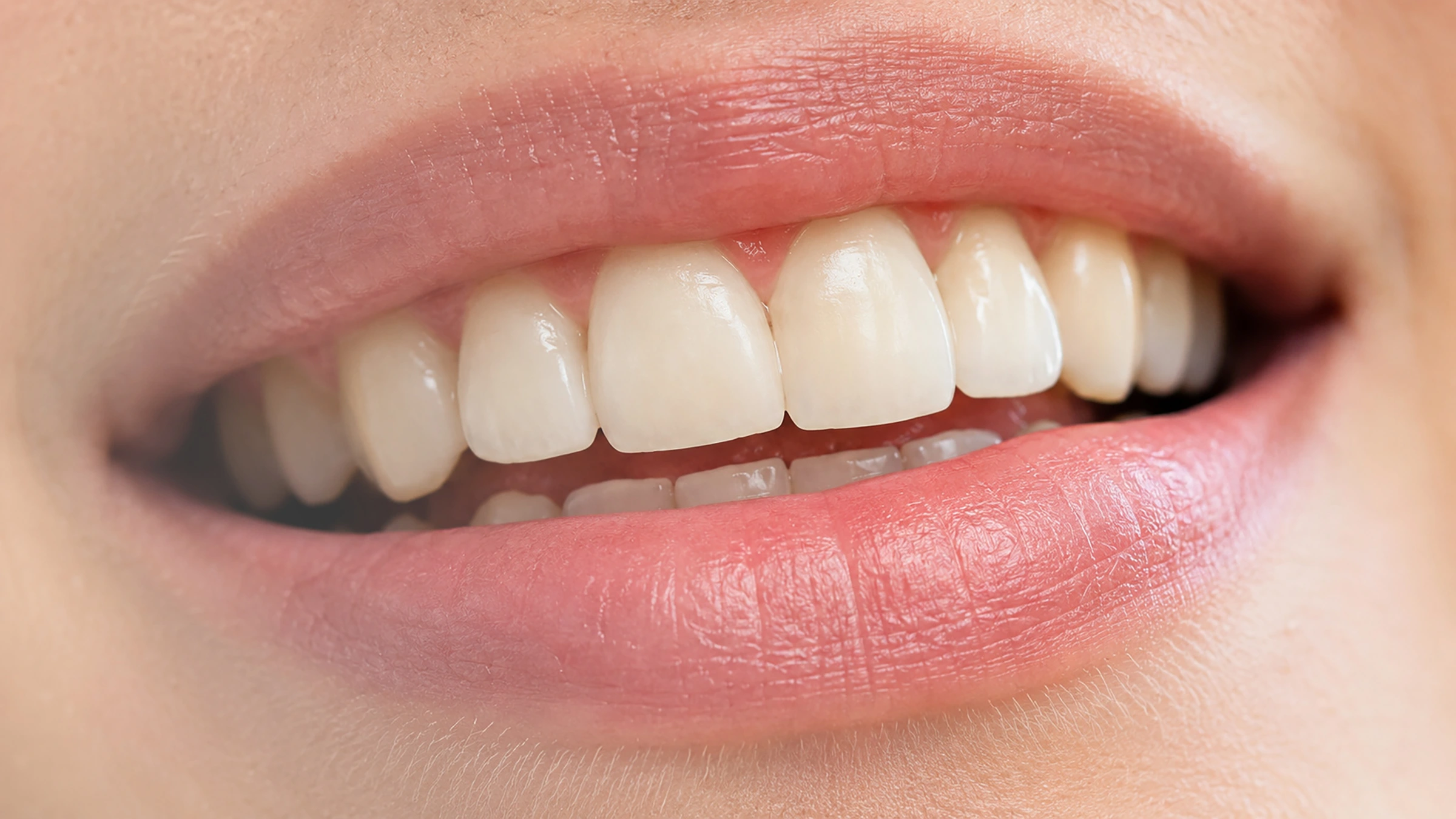
The desire to have teeth whitened is one of the most common requests in my practice—and few topics come with such a wide range of expectations. Some patients come in with a very specific idea in mind, while others have no idea what to expect. And almost always, after the initial consultation, it becomes clear that the result depends on six factors that neither…
-
In my practice, dental implants are the topic that patients most often bring up with a half-finished sentence: “I’d like to get an implant, but…” But I smoke. But I don’t have enough bone. But I’m too old for that. But I’m afraid. But I’ve heard they don’t last. I hear these five objections regularly during consultations at my office on Ludwigstraße in Offenbach.…
-

Root canal treatment is a source of anxiety for many people. There are reasons for this, but they often disappear when you take a closer look. Anyone in Offenbach facing root canal treatment usually has the same questions: Will it hurt? How long will it take? How much will it cost? And above all: Who can I trust with my tooth? This article summarizes the seven most important points…
